Personality vs Character

In the book I am currently working on (A Soldier’s Wife, historical novel set in World War I), I have two people who are superficially very similar, but who are very different underneath.

This got me thinking about personality vs character.

Our culture is obsessed with personality: we’ve even made it into a noun, ‘a personality’; it’s possible to have an entire career out of how we present ourselves to the world. And while this presentation is strongly influenced by our background, socio-economic status, and so on, we feel instinctively that personality is somehow innate.

The research tends to back this up, at least with regard to some traits. Risk-taking, for example, is distinctly different in babies of only 6-9 months old. Shyness appears to be innate. Our genes, according to New Scientist, are implicated in five main areas: ‘These big five – extroversion, neuroticism, conscientiousness, openness [to ideas] and agreeableness – define five axes along which all individuals fall.’[a]

Each of these is a continuum (from extroversion to introversion, from abstract intellectual curiousity (open minded) to complete concrete thinking…) and each interacts with the other to create a unique personaltiy profile for each person. What a tool for writers! I thought when I read this. You just figure out where your protagonist falls along each of these axes, and you’ve done your work.

But you haven’t, because you haven’t taken into account character.

By ‘character’, I mean the old-fashioned, non-writerly usage: a man of good character, strength of character, a shady character. This usage has moral overtones, and was often used judgmentally, but if we look deeper into it, we can see that ‘character’ in this context means the part of the person which controls their choices.

The relevant definition from the OED is: The sum of the moral and mental qualities which distinguish an individual or a race, viewed as a homogeneous whole; the individuality impressed by nature and habit on man or nation; mental or moral constitution.

But we can go back further in thinking about character. The original meaning of the word was: A distinctive mark impressed, engraved, or otherwise formed; a brand, stamp.

Character is what happens to personality to shape the person’s moral and ethical universe, to set their prejudices, both conscious and unconscious, to modify or exaggerate their innate desires, and – most importantly for writing – to guide their choices.

Yes, a highly agreeable person may be more likely to want to take care of an elderly relative; but so might a less agreeable person, if they have been brought up (inculcated, brainwashed, socialised, whatever you want to call what we do to children) to respect age and believe that it is their inescapable duty to do so.

Let’s look at an example. Say we have two young women. Let’s call them Ashley and Caitlin. They both work at the handbag counter at David Jones’ Elizabeth St store. They have been chosen for this task because of their ‘personality’. They are both bright, bubbly, vivacious, friendly, highly social – extroverts, in fact, which the research tells us makes them prone to risk-taking behaviour. They are both of exactly average intelligence and have roughly the same level of education at the same kind of public school. They both moved out of their parent’s house and now live with their boyfriend.

One day, a customer spends an hour asking them for bag after bag off the ‘exclusive’ shelves behind the counter. They are polite, friendly, professional, but they’re not surprised when she goes off without buying anything. Before she goes, she does her make up at their mirror, and absent-mindedly puts her wallet down on the counter as she’s rummaging in her bag for her lipstick. She walks off without the wallet.

On the surface, these girls are identical. But now is the test of character. What will they do?

You can run this scenario twice. In one, Ashley finds the wallet and, after a moment of severe temptation, runs after the woman and gives it back. In the other, Caitlin finds the wallet and, after the same moment of temptation, slips in into her pocket.

Why the difference? Because Ashley has been brought up to be honest. Her parents valued honesty and prasied her when she showed it. Caitlin’s parents, not so much. In her house there was more of the ‘you’ve got to take what you can get’ attitude. And this shaped her character.

Now if all this sounds like a rehash of the ‘nature vs nurture’ debate, you’d be right. But what I’m interested in is the implication for writers.

Because if we look at the example above, we can see that character = plot. It’s the protagonist’s choices which shape the plot, and their choices, while influenced by their personality (Caitlin is extroverted, therefore prone to risk-taking), are determined, in the end, by their character. Too often, new writers concentrate on personality. So often I’ve asked my students to describe their protagonist, and they will describe the personality. They won’t mention values, or beliefs, or ethical or moral convictions, and yet these are what control choices, which means they control, in the end, the action in the story.

So, character equals plot, but personality, very often, equals tone. I think that’s next week’s post.
Princess Betony is now a series

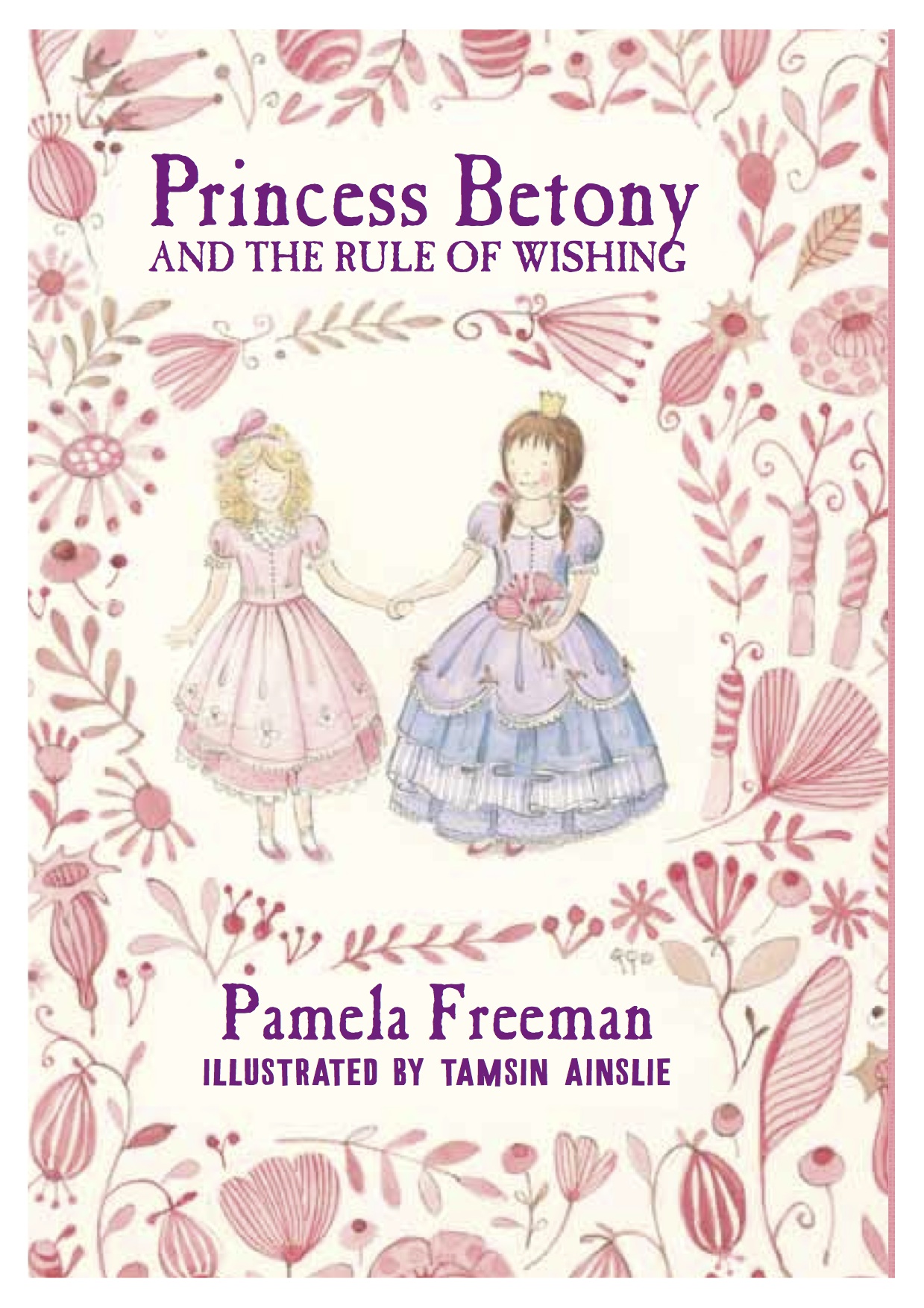
The Princess Betony books were always going to be a series, but now the second book, Princess Betony and the Thunder Egg, is due to hit the bookshops in the first week of March, so booksellers will start shelving them in the series section!

princess-betony-and-the-thunder-egg

I”m getting more and more excited about the Betony books as I see Tamsin Ainslie’s wonderful illustrations. You can check out some of them, plus games and free stories, at www.princessbetony.com

Click the Betony tab at the top of this page to see more information about the books!

Outlines and adaptations

With some trepidation I sent the first draft of the outline for Victor’s Quest (the musical) to the composer, Peter Rutherford, and our producer, Neil Gooding, this week.  Given that I know they like the book, it might seem silly to be so nervous (still am!) but the nerves come out at the beginning of any new venture, I think.

What I found interesting in writing the outline was how previous experience adapting someone else’s book for television helped.  A long time ago, I adapted Mem Fox’s Night Noises as a For the Juniors episode.  Because Night Noises is a picture book, there just wasn’t enough story for a half-hour episode.  But on each page, the old lady, Lily Laceby, is dreaming about/remembering a piece of her past, so we took each of those images and wove a little scene/story out of it.  It was an education in seeing the difference between what works on the page and what works on screen (or on stage).

So in making my own adaptation, I started from a premise that nothing was sacred.  It’s remarkably liberating.  As it happened, I kept fairly closely to the book but cut out some scenes where people sat down and ate or thought for a long time, because that would slow the action down too much, and inserted three extra scenes to introduce characters and establish motivation.

I had to make a conscious effort to forget Kim Gamble’s illustrations, too.  Kim did both Victor books and it’s very hard now to imagine a scene without his images.  But the stage version will be significantly different.

Night Noises was my first drama script.  We had some great actors in that show:  Queenie Ashton played Lillie and Noah Taylor her brother in the past. Lots of others, too.

Working with those people, I learnt about leaving spaces for actors to expand into… it’s a hard thing to explain, but the script shouldn’t tie everything down; the writer wants to control everything, but you can’t.  That’s the trade off:  working with composers, actors, producers, directors, animators, puppeteers and all the other technical staff gives your script a richness and depth – and a rigour – you can’t get on your own.  But the final result may not be what you had imagined.

I have missed that collaboration and that sense of ‘goodness me, I didn’t know that scene worked that way!’. It’s why I love working with illustrators on books for kids – I relish the extra layer of meaning and life that the illustrator gives to the text.

On the other hand, one of the things I like about writing adult books is that what I imagine is what there is…

…lucky I get both, I guess!

Circus Oz

In my current effort to see as many performances with music as possible, I was lucky to be treated to an outing to Circus Oz (thank you, Katherine!)  Circus Oz, for those who don’t know them, is mostly acrobatic and physically based – think Cirque de Soleil seasoned with Australian irreverence and much better music.

A great time was had, although it was a stinking hot day and the big top turned into a sauna.  I was particularly struck by the band, and in particular the drummer.

I have a confession – I am learning the drums.  I started almost two years ago, and I’m at the stage where I know how much more I have to learn.  I have a wonderful teacher, Bruce Stephens, and he has guided me through some rocky places already.  The Acquisition of The Drum Kit(s), for example (another time, I might tell that story here).

So I now watch the drummer in any band (I used to watch the singer) and the drummer at Circus Oz was fantastic, both as a musician and as a performer.  Very inspiring.

Although I thoroughly enjoyed the acts, the experience at Circus Oz made me acutely aware of how important sound quality is for dialogue.  The acts often included patter or commentary which could not be properly heard, and this meant that the nuances of the jokes and their relationship to the performances were lost.  In the end, I think most people just stopped listening and watched.  There was more than enough in the performances to keep everyone entertained, but I thought it was a shame that whatever they were trying to do in the script was lost on the audience.

The lesson for me for Victor the musical?  Not too many words and make them directly related to the scene.

Hairy Maclary

Went to see Hairy Maclary and Friends at the Opera House Playhouse.  A much younger audience than we’re aiming for, obviously, but lots of fun.  I find I am already assessing shows differently.  As a scriptwriter, I’ve always tended to analyse how a theatre production is put together – in fact, my sister won’t go to the theatre or movies with me anymore because she says I spoil the illusion by dissecting ‘how they did it’ afterwards!  But my focus has been on what you might call the storytelling aspects of the craft.  Now I find I’m looking more closely at staging and costs.

For example, the Hairy Maclary show has seven cast members.  That’s big for a kids’ show, but was forced on them by the books.  They had to have all the dogs on stage at once, because the stories require that.  That makes six actors, plus at least one human (Miss Plum).  Although the dog actors take other parts (Sam Stone, Schnitzel Von Krumm’s family, bees), it’s still quite a hefty cast for a one-hour production.  This means that the ticket cost is quite high:  between $29 and $49.  That might not seem a lot compared to an adult play, but imagine if you have four kids – for the good seats, that’s $245; for the worst seats, it’s still $145.  A lot to pay for an hour.  I’d love to know if other venues charge as much for this show, because the Opera House can charge a premium.

There was also live music – a guy on a keyboard, who also operated a bubble machine at the end.  Now this was interesting – not having pre-recorded music allowed the actors to interact more with the audience, as this show was very much the ‘behind you, behind you!’ style of kids’ performance, where there is no fourth wall and the kids are part of the action.  With pre-recorded music, it would be very hard to do a lot of this, it seems to me.  Less improvisation is not necessarily a bad thing, however.

The stage design was beautifully flexible.  Nothing came down out of the flies except some spiders, who could just as easily have been on a long pole.  So the show doesn’t need a proscenium arch theatre.  The scene changes were done by the on-stage cast rolling scenery around or pulling it out.  Simple and effective and completely acceptable to an audience raised on Playschool, which does the same thing even more simply.  You could stage this on a dais in a shopping mall; you could stage it in theatre in the round; you could stage it in a church hall; you could stage it in a school playground, if you had to.

So much to think about!

Research

It is quite hard to find a copy of Into the Woods! But the lovely City of Sydney library has a VHS, it appears, so it’s a trip to the city for me this week.  I am doing quite a bit of research (hehe).  This requires me to go to lots of musicals and musicalish shows.  No, really, it does.

So last week I went to Annie and Tubular Bells for Two, and last night saw La Soiree at the Opera House.  What a fantastic show!  Athletic, sophisticated, hysterically funny and beautifully staged.  But definitely not for children!